


 Click it and Unblock the Notifications


Imagine this very day - January 29. Only the year is different. The year is 1660 and you are taking a stroll through Chandni Chowk (the moonlight square) at night with the moonlight reflecting through the water in the canals. Vendors sell their varied wares of jewellery and spices. You haggle with the shopkeepers and when you are tired take a break to feast on some kababs or some jalebis. In the distance, the strains of music waft through the air.
The canals have long dried up and the music is lost but do visit the remnants of Shahjahanabad or what is known as Old Delhi today to search for a bit of nostalgia and romance. Take a metro train to Chandni Chowk and stroll around all these places.

Jama masjid
The Jama Masjid or the Masjid-i-Jahan-Numa ( the world-reflecting mosque) is one of the best known mosques of India. It was built by the Mughal Emperor Shah Jahan, in 1650 and completed in 1656. The courtyard of the mosque can hold up to twenty-five thousand worshippers. The mosque houses many relics which includes a copy of the Quran written on deer skin.
Pic credit:russbowling

Digambar Jain temple and Birds hospital
The oldest and best known jain temple in Delhi, it sits directly across the red fort. Check out the one of its kind Birds veterinary hospital in the same complex.
Pic credit: Friar's Balsam

Churi wali gali
Churi wali gali literally translates into ' the lane of bangles'. It is a lane dating back to the days of the Emperor Shahjahan. Little of the old world charm remains today and the number of shops have come down too but nevertheless do check out some of the beautiful merchandise on display.
Pic credit:
Supratim Ghosh

Dariba Kalan
Asia's largest jewellery market resides here on this street. Though the street is as old as the nearby Jama masjid, the shops existing here today claim to date back to the 19th century. Be sure to check out the Jalebi shops at both ends of the street.
Pic credit: varunshiv
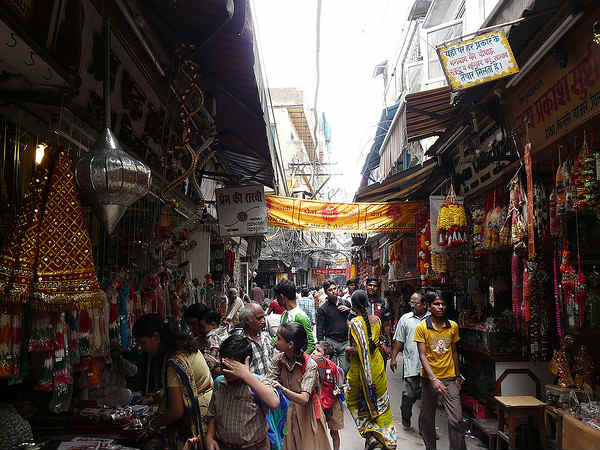
Kinari Bazaar
From Dariba kalan, take a narrow street to the right to find Kinari bazaar, famous among Delhiites for wedding ceremony accessories.
Pic credit: varunshiv

Chawri bazaar
Today most people would know this only as another metro train stop, but once upon a time It was a area for courtesans and young men from noble families were expected to learn the arts of peotry, paan and love from dancing courtesans. With time, the pleasures of the place faded away and today it is a market place where some call India's biggest centre for wedding cards.
Pic credit: Wiki Commons
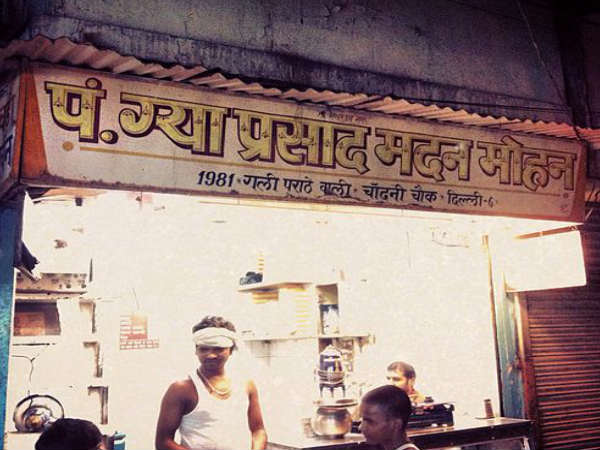
Parathe wale Gali
Before the Paranthe shops came in the 1870s this lane was known for its silverware shops. Pt Kanhaiyalal Durgaprasad Dixit(estd 1875), Pt Dayanand Shivcharan (estd 1882). Pt Baburam Devidayal Paranthewale (estd 1886) are the oldest Parantha shops here that boast of famous customers like Jawaharlal Nehru.
Pic credit: Wiki Commons
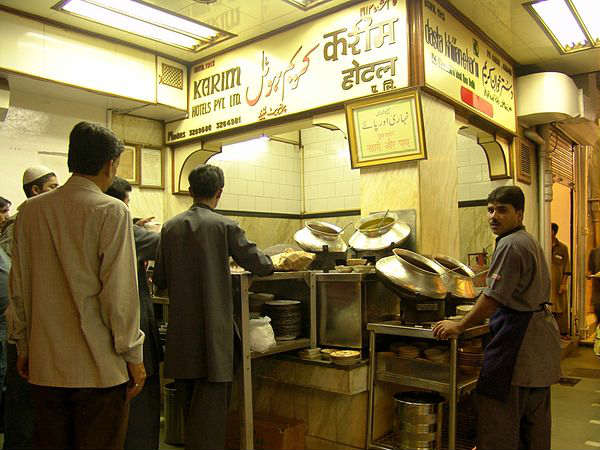
Karim's
Located near the Jama masjid, and snonymous with this area, this is a probably the most famous restaurent in this area. Drop in to have a taste of authentic Mughal cuisine.
Pic credit: Wiki Commons
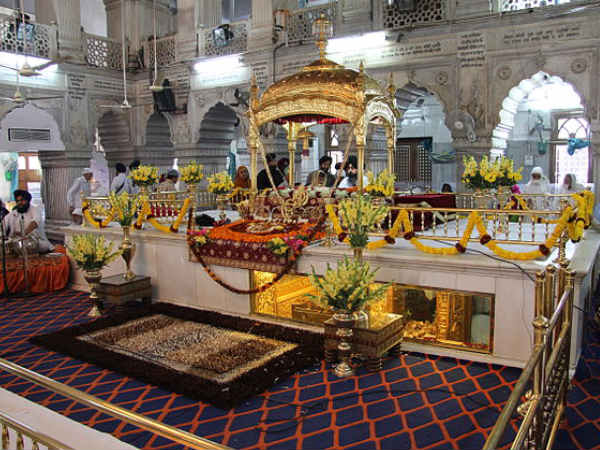
Gurudwara Sis Ganj
Gurdwara Sis Ganj Sahib, is one of the nine historical gurdwaras in Delhi. It marks the site where the ninth Sikh Guru, Guru Tegh Bahadur, was beheaded on the orders of the Mughal emperor Aurangzeb, for refusing to convert to Islam in 1675.
Pic credit: Wiki Commons
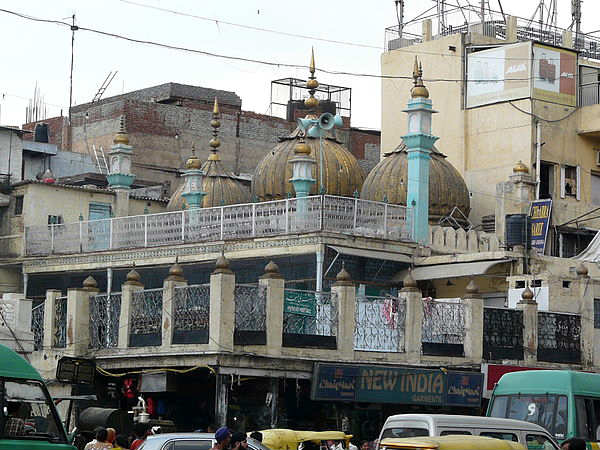
Sunehri masjid
Not to be confused with the Sunehri masjid inside the Red Fort, this is near the Gurudwara and was built in 1721. Today it is under threat of encroachment.
Pic credit: Wiki Commons
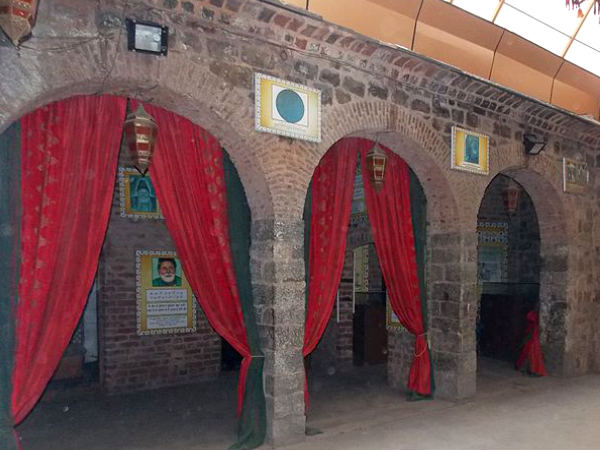
Ballimaran , Ghalib 's Haveli
Named after the wooden poles (balli) used to anchor boats in the Yamuna, this street is most famous for having the house of the famous Urdu poet, Mirza Ghalib. Today, Ballimaran is famous for shops selling spectacles and made-in-Agra leather shoes.
Pic credit: Wiki Commons
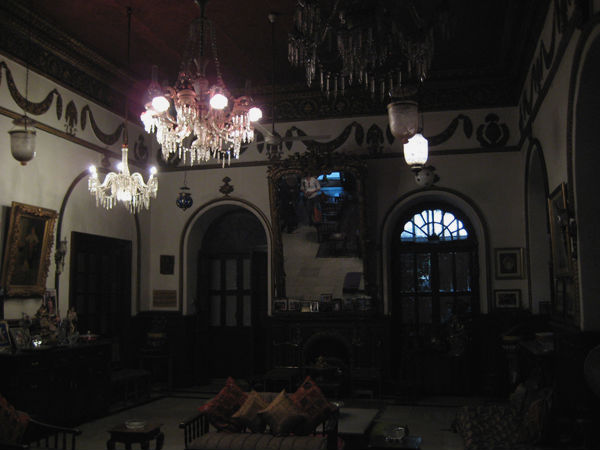
Chunnamal Haveli
Another haveli, although a well-preserved one, Rai Lala Chunnamal was a merchant who lived in the 19th century.
Pic credit: Wiki Commons

Khari Baoli
Another street, known for its wholesale grocery and Asia's largest wholesale spice market. This market is also in existence since the 17th century.
Pic credit: Wiki Commons